
• Skip to primary navigation
  • Skip to main content
  • Skip to primary sidebar
  • Home
  • Directors
  • Research Groups
    • Dr. Don Russell & Carl Benner Group
    • Dr. Karen Butler-Purry Group
  • Projects
    • Projects of Dr. B. Don Russell Group
    • Projects of Dr. Butler-Purry
  • News
  • Contact Us

Power System Automation Laboratory

Texas A&M University College of Engineering

Carl Benner

Research Sparks Prevention Techniques For Wildfires And Outages

Posted on January 16, 2025 by Shelby Bruffett

Engineers are studying ways to monitor power lines for faults and failures to correct those conditions before an outage or fire occurs.

By Katie Satterlee, Texas A&M Engineering | January 16, 2025 | Link to Original Article
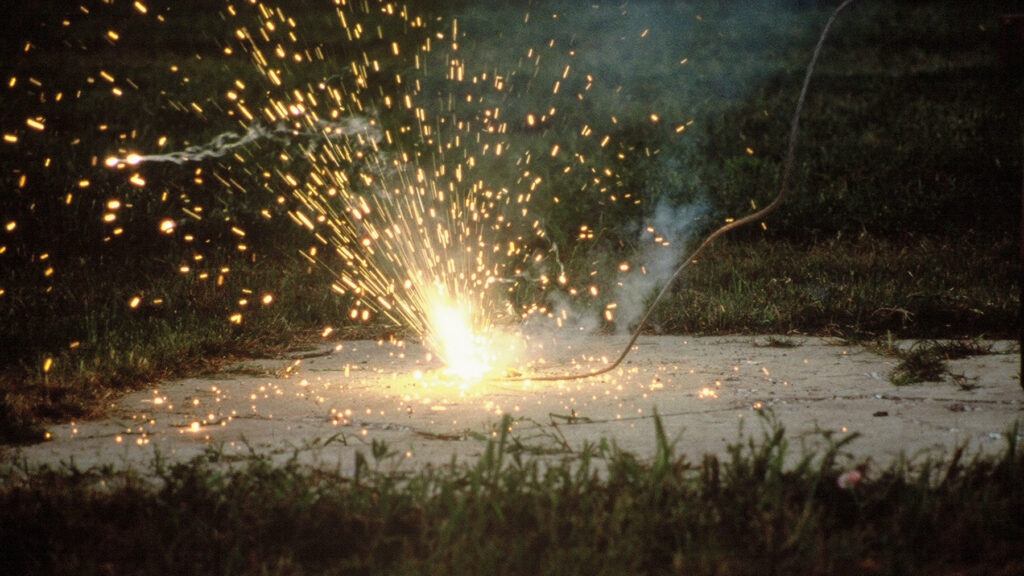
A downed conductor on concrete. Photo provided by Dr. Jeffrey Wischkaemper

Fires can start in 10s of milliseconds, and approximately 10% of wildfires are started by something related to the power system.


For over 30 years, researchers in the Power System Automation Laboratory in the Department of Electrical and Computer Engineering at Texas A&M University have been studying ways to monitor electric power lines for faults and failures to correct those conditions before an outage, fire or catastrophic failure occurs.


In that time, they have conducted several projects to enhance their Distribution Fault Anticipation (DFA) system. The idea is to anticipate a fault before it happens.


Made up of a four-man team that has been conducting research together for decades, Professor B. Don Russell and Principal Research Engineers Carl Benner, Jeffrey Wischkaemper and Karthick Manivannan are working on a nearly $3.2 million Department of Energy (DOE) project titled “Preventing Wildfire Ignition from Powerline Equipment Failures Using ML-Based Classification of Real-Time Electrical Measurements.”


What started as a focus on failure diagnosis of mechanisms on power lines evolved into wildfire and power outage prevention caused by power lines.


“We recognized that a lot of what we were detecting — failures and abnormal conditions out on the power system — were also causing wildfires. And that was just serendipitous. That wasn’t because we set out to do something to fix wildfires,” Russell said.


In combination with growing drought conditions over the last decade, environmental climate change, and changing rain and humidity levels around the country, wildfires have notably grown.


“About 10 years ago, we recognized there was a very substantial increase in the number of wildfires that had been started by electric power lines in the United States,” Russell said.


Since power lines are pervasive in the United States’ geography, a fire could happen anywhere. Most of the vulnerable territories are in rural areas where nobody’s there to observe a fire start and report it.


For one project, the team worked for four years with seven Texas utility companies and received a multi-million-dollar grant from the state of Texas to study the impact of power lines on wildfire ignition and what could be done to prevent fires.


During this project, the team developed techniques that could find and allow companies to fix mechanisms that start wildfires. The main causes of wildfires are weather and human actions, such as dry lightning, an unattended barbecue pit, or burning trash. Each year, up to 10% of fires are started by power lines.


How Do Fires Get Started From Power Lines?

Power line conductors in the air can move around substantially in high wind conditions, and if they hit each other—called a conductor clash—they throw off incandescent metal particles that are ignition mechanisms.


Fires can also start from equipment failure. This can occur if a transformer explodes or a pole falls over and lines end up on the ground, or a connector, the device holding the power lines together, overheats and drops melted metal.


The single largest issue is when power lines break in the air, fall to earth and arc to the ground. Arcing conditions sometimes only last for half a second, but it doesn’t take long to start a fire. To make matters worse, sometimes these ground fault conditions are not easily detectable.


The team is examining how conditions in the air affect power lines to prevent them from falling. The team’s algorithms can detect small arcing conditions and failures from miles away. Their DFA system can give utilities up to weeks’ notice of a problem long before catastrophic failure.


“If we can find the issue and tell utilities it’s happening today, they can find and fix it by tomorrow,” Russell said. “We’ve been able to predict the location of power line equipment failure, which left alone for two weeks could have etched through the conductor and dropped lines to the ground. But we identified the problem weeks in advance and were able to prevent disaster.”


For example, MidSouth Electric Cooperative, a utility company in Navasota, tested DFA and uses it daily. In one instance, a clamp started arcing in the Sam Houston National Forest, which could easily start a fire. The DFA system identified the issue and notified the utility company. They were able to repair the clamp and prevent an outage or a fire.


Using AI And Machine Learning

Currently, the team is using conventional algorithms and computer science programming to conduct research. However, their DOE project will look at expanding that technology through artificial intelligence and machine learning to improve DFA sensitivity and reliability for early detection of failures.


“When the Department of Energy asked for projects under the Office of Cybersecurity, Energy Security and Emergency Response program, we proposed to take all the work we had done over the past 30 years as the foundation and build on that to look for substantial improvements using machine learning and artificial intelligence,” Russell said.


“We’ve been able to detect many failure mechanisms for 15 years, and we’re getting better and better at it, but machine learning carries some distinct possibilities for the future,” Russell added “Hopefully, it will result in even better diagnostic tools to find those things that cause not only wildfires, but also outages for customers.”


The future project also has international scope. The team currently has test systems in Australia, New Zealand, Scotland and England, as well as the United States. Australia and New Zealand have a high risk for wildfire issues, and England and Scotland’s concern is primarily improving reliability.


“This is a tool, not just for wildfire mitigation, but to significantly improve the reliability of service. It would benefit everybody that uses it, even if they’re not in a wildfire-prone area,” Russell said.


Filed Under: News Tagged With: B. Don Russell, Carl Benner, Distribution Fault Anticipation (DFA), Electrical Contact with Trees, Electrical Fires, Jeffrey Wischkaemper, Karthick Manivannan, Outages, Power Line, Power Line Contact, Power System Automation Laboratory, Preventing Wildfire Ignition, Wildfires

California Utility Boosts Use of Texas A&M Wildfire Prevention Tool

Posted on October 5, 2025 by Shelby Bruffett

By Mike Reilly, Texas A&M University Engineering | September 23, 2021 | Link to Original Article

Distinguished Professor Dr. B. Don Russell and Research Professor Carl L. Benner led the Texas A&M team of researchers that developed the Distribution Fault Anticipation technology. | Image: Justin Baetge/Texas A&M Engineering

The threat of catastrophic wildfires has led California investor-owned utility, Pacific Gas and Electric Company (PG&E), to significantly expand its use of a fire prevention tool developed at Texas A&M University.


The tool is called Distribution Fault Anticipation (DFA). It’s a unique hardware and software system that detects circuit anomalies, notifying utility operators to address issues before they cause power outages or spark fires.


Two veteran PG&E engineers, Eric Schoenman and John Mead, highlighted the utility’s growing use of DFA in an article last month titled New Tools in the Fight to Reduce Wildfire Ignition. It was published in T&D World, a leading utility industry magazine.


In 2019 PG&E installed DFA on seven circuits to evaluate its effectiveness. Based on the results, the utility is adding DFA to 50 circuits in 2021 and anticipates adding 600 circuits over the next three years.


Priority will be given to circuits in the areas most vulnerable to wildfires. Nearly one-third of PG&E electric lines are in state-designated high fire-threat zones.


“DFA detects low-current events that conventional systems do not detect,” Schoenman and Mead wrote. “The fundamental key to addressing these phenomena is knowledge that they are occurring, knowledge that DFA can in many cases provide.”


A Texas A&M team of engineers that developed DFA is led by Distinguished Professor Dr. B. Don Russell and Research Professor Carl L. Benner, both in Texas A&M’s Department of Electrical and Computer Engineering.

We’re proud to make a positive difference in a region of the country so vulnerable to catastrophic wildfires.”
Dr. B. Don Russell

The team has worked closely with PG&E engineers on integrating DFA with the utility’s other equipment, including other types of risk-reduction tools.


“We’re proud to make a positive difference in a region of the country so vulnerable to catastrophic wildfires,” Russell said.


The expansion at PG&E is the latest example of utilities turning to DFA. The system is also being used by Southern California Edison in California and a number of utilities in Texas, Georgia, Indiana, Oregon, Tennessee, Virginia, the United Kingdom, Australia and New Zealand.


Mid-South Synergy Electric Co-op in Texas, which operates in small towns and rural areas southeast of College Station, is placing DFA on all of its circuits.


“It’s a great system,” General Manager Kerry Kelton said. “We have miles and miles of exposed feeder lines across pastures that are not easy to inspect directly. DFA gives us the intelligence we need to prevent many outages. It can help us every day.”


Electrical power outages commonly are caused by falling tree branches, errant animals or failures of devices such as clamps, switches, conductors and connectors.


The conditions can build up over weeks or months, impacting electrical currents in small ways before actual failures. DFA monitors currents and applies algorithms to detect and report abnormalities for investigation and repair.


Until now, utilities have had little choice but to wait and react to actual failures. Operators recognize that something better is needed, given the growing threat of wildfires.


“DFA gives operators real-time awareness of the health of their system,” Benner said. “While nothing will ever prevent all outages, DFA can increase reliability for a utility’s customers and reduce ignition risks.”

Filed Under: News Tagged With: B. Don Russell, Carl Benner, DFA Technology, Electrical and Computer Engineering, Research

Texas A&M Develops Tool to Predict Power Failures that Lead to Wildfires

Posted on July 6, 2025 by Shelby Bruffett

California utilities testing Aggie software that has been successfully used by Texas utilities


By Mike Reilly, A&M System News | December 3, 2019 | Link to Original Article


COLLEGE STATION, Texas – Imagine a tool that can discover problems on utility lines before outages, before power failures spark deadly wildfires, or before fears of wildfires prompt massive, pre-emptive power outages such as those suffered recently by millions of Californians.


Well, the tool exists. It is available today. And it works.


Engineers at Texas A&M University have developed the tool, a one-of-a kind diagnostic software called Distribution Fault Anticipation (DFA).


It is a software that interprets variations in electrical current on utility circuits caused by the deteriorating conditions or equipment. It warns utility operators to respond to particular problems before they cause outages and possibly spark fires.


Electric power companies have nothing else like it.


DFA has been tested successfully by more than a dozen utilities in Texas and elsewhere over the past six years.


Now DFA is being tested by two of California’s biggest utilities, Pacific Gas & Electric (PG&E) and Southern California Edison (SCE), with encouragement from the California Public Utilities Commission. The CPUC administers a 2018 state law requiring utilities to submit Wildfire Mitigation Plans.


Texas A&M researchers also are preparing to test DFA at utilities In Australia and New Zealand.


DFA uses a sophisticated set of algorithms based on patterns discovered and refined through 15 years of research, research that involved monitoring in-service distribution lines at more than a dozen electrical utilities.


The technology was developed by a Texas A&M research team led by Dr. B. Don Russell, Distinguished Professor of Electrical and Computer Engineering, and Research Professor Carl L. Benner.


Research support for DFA was provided by the Electric Power Research Institute, the state of Texas, and various electric utilities.


Russell and Benner likened DFA to the computer-based diagnostic tools found in modern cars, ones that warn fluids are running dry or that an engine part is close to failure.


“Utility systems operate today like my 1950s Chevy,” Russell said. “They have some fuses and breakers and things, but they really don’t have anything diagnostic. They don’t have that computer under the hood telling them what’s about to go wrong.”


Electrical power outages are commonly caused by falling trees tearing down lines or failures of devices such as clamps, switches, conductors and connectors.


The devices often deteriorate over weeks or months, impacting electrical current in small ways before an actual failure — perhaps triggered by high winds.  DFA continuously monitors current sensors and applies its algorithms to detect and report abnormalities for investigation and repair.


Until now, utility companies have had little choice but to wait and react to failures. Electrical equipment is extremely durable and deterioration of devices is difficult or impossible to see. That makes visual inspection and preventive maintenance only marginally helpful.


Utilities have long recognized that something new is needed, especially given the nation’s aging infrastructure. DFA answers this need.


Texas A&M engineers developed DFA to help utility companies improve reliability in general, but they also saw its potential for preventing wildfires.


While Russell and Benner emphasize that DFA will not detect all utility failures, they say it is the only diagnostic tool available to analyze in real time miles of working circuits and identify explicitly what is failing.


Not only could the DFA technology prevent fires, it would give utility companies a tool to reduce the number and size of pre-emptive power outages, which now are based on dry conditions and weather forecasts.


“Power is being turned off with nothing known to be wrong with a given circuit,” Russell said. “Utilities need a crystal ball, something telling them which circuit is going to start a fire tomorrow because it is already unhealthy. We are kind of that crystal ball.”


Pacific Gas & Electric is now testing six DFA circuit monitoring devices; Southern California Edison is testing 60 DFA monitors. Both utilities are conducting the tests under two-year research contracts with Texas A&M.


Commercial installation for widespread use in California would cost far less than the billions of dollars in recent wildfire damage, or the billions in spending being discussed for other types of preventive measures.


For example, San Francisco based PG&E, the state’s largest utility, would need several thousand devices to cover all 106,681 miles of distribution circuit lines. A DFA device costs up to $15,000.


PG&E filed for bankruptcy this past January, citing potential liabilities of more than $30 billion stemming from wildfires. It estimates it will need another $75 billion or more to comply with a judge’s maintenance plan.


Widespread use of DFA could lower maintenance costs and prevent future tragedies.


“DFA is a new tool, allowing utilities to transform their operating procedures to find and fix problems before catastrophic failures, “Russell said. “Utilities operators need real time situational awareness of the health of their circuits…..DFA does that!”

Filed Under: News Tagged With: B. Don Russell, Carl Benner, DFA Technology, Distribution Fault Anticipation (DFA)

Research Sparks Prevention Techniques For Wildfires And Outages

Posted on January 16, 2025 by Shelby Bruffett

Engineers are studying ways to monitor power lines for faults and failures to correct those conditions before an outage or fire occurs.

By Katie Satterlee, Texas A&M Engineering | January 16, 2025 | Link to Original Article

A downed conductor on concrete. Photo provided by Dr. Jeffrey Wischkaemper

Fires can start in 10s of milliseconds, and approximately 10% of wildfires are started by something related to the power system.


For over 30 years, researchers in the Power System Automation Laboratory in the Department of Electrical and Computer Engineering at Texas A&M University have been studying ways to monitor electric power lines for faults and failures to correct those conditions before an outage, fire or catastrophic failure occurs.


In that time, they have conducted several projects to enhance their Distribution Fault Anticipation (DFA) system. The idea is to anticipate a fault before it happens.


Made up of a four-man team that has been conducting research together for decades, Professor B. Don Russell and Principal Research Engineers Carl Benner, Jeffrey Wischkaemper and Karthick Manivannan are working on a nearly $3.2 million Department of Energy (DOE) project titled “Preventing Wildfire Ignition from Powerline Equipment Failures Using ML-Based Classification of Real-Time Electrical Measurements.”


What started as a focus on failure diagnosis of mechanisms on power lines evolved into wildfire and power outage prevention caused by power lines.


“We recognized that a lot of what we were detecting — failures and abnormal conditions out on the power system — were also causing wildfires. And that was just serendipitous. That wasn’t because we set out to do something to fix wildfires,” Russell said.


In combination with growing drought conditions over the last decade, environmental climate change, and changing rain and humidity levels around the country, wildfires have notably grown.


“About 10 years ago, we recognized there was a very substantial increase in the number of wildfires that had been started by electric power lines in the United States,” Russell said.


Since power lines are pervasive in the United States’ geography, a fire could happen anywhere. Most of the vulnerable territories are in rural areas where nobody’s there to observe a fire start and report it.


For one project, the team worked for four years with seven Texas utility companies and received a multi-million-dollar grant from the state of Texas to study the impact of power lines on wildfire ignition and what could be done to prevent fires.


During this project, the team developed techniques that could find and allow companies to fix mechanisms that start wildfires. The main causes of wildfires are weather and human actions, such as dry lightning, an unattended barbecue pit, or burning trash. Each year, up to 10% of fires are started by power lines.


How Do Fires Get Started From Power Lines?

Power line conductors in the air can move around substantially in high wind conditions, and if they hit each other—called a conductor clash—they throw off incandescent metal particles that are ignition mechanisms.


Fires can also start from equipment failure. This can occur if a transformer explodes or a pole falls over and lines end up on the ground, or a connector, the device holding the power lines together, overheats and drops melted metal.


The single largest issue is when power lines break in the air, fall to earth and arc to the ground. Arcing conditions sometimes only last for half a second, but it doesn’t take long to start a fire. To make matters worse, sometimes these ground fault conditions are not easily detectable.


The team is examining how conditions in the air affect power lines to prevent them from falling. The team’s algorithms can detect small arcing conditions and failures from miles away. Their DFA system can give utilities up to weeks’ notice of a problem long before catastrophic failure.


“If we can find the issue and tell utilities it’s happening today, they can find and fix it by tomorrow,” Russell said. “We’ve been able to predict the location of power line equipment failure, which left alone for two weeks could have etched through the conductor and dropped lines to the ground. But we identified the problem weeks in advance and were able to prevent disaster.”


For example, MidSouth Electric Cooperative, a utility company in Navasota, tested DFA and uses it daily. In one instance, a clamp started arcing in the Sam Houston National Forest, which could easily start a fire. The DFA system identified the issue and notified the utility company. They were able to repair the clamp and prevent an outage or a fire.


Using AI And Machine Learning

Currently, the team is using conventional algorithms and computer science programming to conduct research. However, their DOE project will look at expanding that technology through artificial intelligence and machine learning to improve DFA sensitivity and reliability for early detection of failures.


“When the Department of Energy asked for projects under the Office of Cybersecurity, Energy Security and Emergency Response program, we proposed to take all the work we had done over the past 30 years as the foundation and build on that to look for substantial improvements using machine learning and artificial intelligence,” Russell said.


“We’ve been able to detect many failure mechanisms for 15 years, and we’re getting better and better at it, but machine learning carries some distinct possibilities for the future,” Russell added “Hopefully, it will result in even better diagnostic tools to find those things that cause not only wildfires, but also outages for customers.”


The future project also has international scope. The team currently has test systems in Australia, New Zealand, Scotland and England, as well as the United States. Australia and New Zealand have a high risk for wildfire issues, and England and Scotland’s concern is primarily improving reliability.


“This is a tool, not just for wildfire mitigation, but to significantly improve the reliability of service. It would benefit everybody that uses it, even if they’re not in a wildfire-prone area,” Russell said.


Filed Under: News Tagged With: B. Don Russell, Carl Benner, Distribution Fault Anticipation (DFA), Electrical Contact with Trees, Electrical Fires, Jeffrey Wischkaemper, Karthick Manivannan, Outages, Power Line, Power Line Contact, Power System Automation Laboratory, Preventing Wildfire Ignition, Wildfires

People

Faculty Profiles

B. Don Russell

Carl L. Benner

Karen L. Butler-Purry

Jeffrey Wischkaemper

Karthick Manivannan

© 2016–2026 Power System Automation Laboratory Log in

Texas A&M Engineering Experiment Station Logo
  • College of Engineering
  • Facebook
  • Twitter
  • State of Texas
  • Open Records
  • Risk, Fraud & Misconduct Hotline
  • Statewide Search
  • Site Links & Policies
  • Accommodations
  • Environmental Health, Safety & Security
  • Employment