
• Skip to primary navigation
  • Skip to main content
  • Skip to primary sidebar
  • Home
  • Directors
  • Research Groups
    • Dr. Don Russell & Carl Benner Group
    • Dr. Karen Butler-Purry Group
  • Projects
    • Projects of Dr. B. Don Russell Group
    • Projects of Dr. Butler-Purry
  • News
  • Contact Us

Power System Automation Laboratory

Texas A&M University College of Engineering

News

Research Sparks Prevention Techniques For Wildfires And Outages

Posted on January 16, 2025 by Shelby Bruffett

Engineers are studying ways to monitor power lines for faults and failures to correct those conditions before an outage or fire occurs.

By Katie Satterlee, Texas A&M Engineering | January 16, 2025 | Link to Original Article
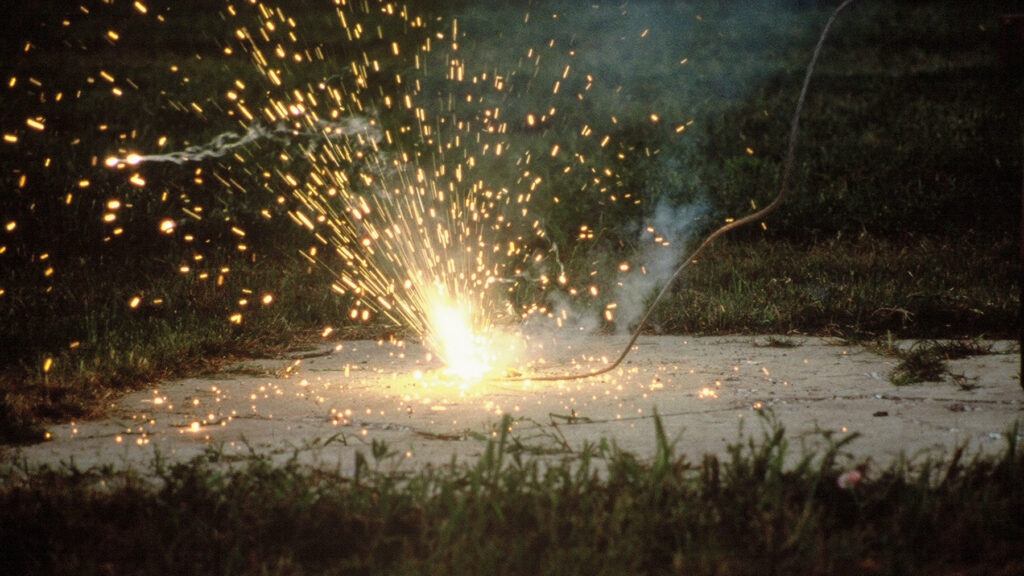
A downed conductor on concrete. Photo provided by Dr. Jeffrey Wischkaemper

Fires can start in 10s of milliseconds, and approximately 10% of wildfires are started by something related to the power system.


For over 30 years, researchers in the Power System Automation Laboratory in the Department of Electrical and Computer Engineering at Texas A&M University have been studying ways to monitor electric power lines for faults and failures to correct those conditions before an outage, fire or catastrophic failure occurs.


In that time, they have conducted several projects to enhance their Distribution Fault Anticipation (DFA) system. The idea is to anticipate a fault before it happens.


Made up of a four-man team that has been conducting research together for decades, Professor B. Don Russell and Principal Research Engineers Carl Benner, Jeffrey Wischkaemper and Karthick Manivannan are working on a nearly $3.2 million Department of Energy (DOE) project titled “Preventing Wildfire Ignition from Powerline Equipment Failures Using ML-Based Classification of Real-Time Electrical Measurements.”


What started as a focus on failure diagnosis of mechanisms on power lines evolved into wildfire and power outage prevention caused by power lines.


“We recognized that a lot of what we were detecting — failures and abnormal conditions out on the power system — were also causing wildfires. And that was just serendipitous. That wasn’t because we set out to do something to fix wildfires,” Russell said.


In combination with growing drought conditions over the last decade, environmental climate change, and changing rain and humidity levels around the country, wildfires have notably grown.


“About 10 years ago, we recognized there was a very substantial increase in the number of wildfires that had been started by electric power lines in the United States,” Russell said.


Since power lines are pervasive in the United States’ geography, a fire could happen anywhere. Most of the vulnerable territories are in rural areas where nobody’s there to observe a fire start and report it.


For one project, the team worked for four years with seven Texas utility companies and received a multi-million-dollar grant from the state of Texas to study the impact of power lines on wildfire ignition and what could be done to prevent fires.


During this project, the team developed techniques that could find and allow companies to fix mechanisms that start wildfires. The main causes of wildfires are weather and human actions, such as dry lightning, an unattended barbecue pit, or burning trash. Each year, up to 10% of fires are started by power lines.


How Do Fires Get Started From Power Lines?

Power line conductors in the air can move around substantially in high wind conditions, and if they hit each other—called a conductor clash—they throw off incandescent metal particles that are ignition mechanisms.


Fires can also start from equipment failure. This can occur if a transformer explodes or a pole falls over and lines end up on the ground, or a connector, the device holding the power lines together, overheats and drops melted metal.


The single largest issue is when power lines break in the air, fall to earth and arc to the ground. Arcing conditions sometimes only last for half a second, but it doesn’t take long to start a fire. To make matters worse, sometimes these ground fault conditions are not easily detectable.


The team is examining how conditions in the air affect power lines to prevent them from falling. The team’s algorithms can detect small arcing conditions and failures from miles away. Their DFA system can give utilities up to weeks’ notice of a problem long before catastrophic failure.


“If we can find the issue and tell utilities it’s happening today, they can find and fix it by tomorrow,” Russell said. “We’ve been able to predict the location of power line equipment failure, which left alone for two weeks could have etched through the conductor and dropped lines to the ground. But we identified the problem weeks in advance and were able to prevent disaster.”


For example, MidSouth Electric Cooperative, a utility company in Navasota, tested DFA and uses it daily. In one instance, a clamp started arcing in the Sam Houston National Forest, which could easily start a fire. The DFA system identified the issue and notified the utility company. They were able to repair the clamp and prevent an outage or a fire.


Using AI And Machine Learning

Currently, the team is using conventional algorithms and computer science programming to conduct research. However, their DOE project will look at expanding that technology through artificial intelligence and machine learning to improve DFA sensitivity and reliability for early detection of failures.


“When the Department of Energy asked for projects under the Office of Cybersecurity, Energy Security and Emergency Response program, we proposed to take all the work we had done over the past 30 years as the foundation and build on that to look for substantial improvements using machine learning and artificial intelligence,” Russell said.


“We’ve been able to detect many failure mechanisms for 15 years, and we’re getting better and better at it, but machine learning carries some distinct possibilities for the future,” Russell added “Hopefully, it will result in even better diagnostic tools to find those things that cause not only wildfires, but also outages for customers.”


The future project also has international scope. The team currently has test systems in Australia, New Zealand, Scotland and England, as well as the United States. Australia and New Zealand have a high risk for wildfire issues, and England and Scotland’s concern is primarily improving reliability.


“This is a tool, not just for wildfire mitigation, but to significantly improve the reliability of service. It would benefit everybody that uses it, even if they’re not in a wildfire-prone area,” Russell said.


Filed Under: News Tagged With: B. Don Russell, Carl Benner, Distribution Fault Anticipation (DFA), Electrical Contact with Trees, Electrical Fires, Jeffrey Wischkaemper, Karthick Manivannan, Outages, Power Line, Power Line Contact, Power System Automation Laboratory, Preventing Wildfire Ignition, Wildfires

Interview with PAC World guru Dr. Don Russell

Posted on November 5, 2025 by Shelby Bruffett

Protection, Automation & Control World, The Guru | June 3, 2024 | Link to Original Article

PAC World:  When and where were you born?


D.R.: I was born in 1948 and grew up in Denison, Texas, a Railroad town north of Dallas. This was the birthplace of President Dwight Eisenhower.


PAC World:  Where did you go to school? 


D.R.: I attended Denison high school and graduated in 1966.


PAC World:  Did you have any specific interests while in school?


D.R.:  Since I was not very coordinated, my interests in high school focused on academics. I was in the debate club, participated in speech and thespian activities, and sang in choir. We formed a men’s quartet and performed for local groups. I also worked as a music director for local churches.


PAC World:  Can you think of someone or something in your childhood that influenced your decision to become an engineer?


D.R.: I had excellent math, chemistry, and physics teachers in high school. It was the 1960s at the beginning of the great technical revolution in America. We were going into space and playing with things called computers. If you were good in math and science, you needed to be an engineer.


PAC World:  Where did you go to university and why did you choose that particular one?


D.R:  In 1965 I was selected to participate in an NSF summer engineering program at Texas A&M University. That summer convinced me I wanted to be an engineer and that I wanted to go to Texas A&M. I would note that I hadn’t fully grasped the fact that Texas A&M was still an all-male school!


PAC World:  Why did you study electrical engineering?


D.R.:  I had always been interested in electricity. My father taught me how to wire a house. I was fascinated by popular mechanics articles on electricity and electromagnetics in my physics courses. I decided to build my own motor. I was successful; it ran fast for a short period of time. Deciding to be an electrical engineer seem to be the natural thing to do.


PAC World:   Why did you decide to continue your education to get a Ph.D. and why at a different university?


D.R:  I received my BS degree at Texas A&M and was offered an NSF fellowship, so I decided to continue for a master’s degree. I worked in several internships for Texas instruments.


During my masters the department was short of teachers, and I was asked to teach a course in electric engineering for non-EE majors. That was my first introduction to university level teaching. But when I graduated, I was not sure what I wanted to do. As a Christian I had always been interested in scripture and I had worked with young people in churches, so I decided to take a break from engineering and go to Abilene Christian University to study. They gave me a job teaching physics so I could take graduate theology courses.


I had met the great love of my life, Becky Crawford, while in school at A&M. Her father taught petroleum engineering. While I was at ACU we decided to marry in 1973. Becky was still in school, and I had a wife to support.


I was offered an instructor’s position at the University of Oklahoma which allowed me to also study for a PhD. So that’s where we went.


PAC World:  Is there any specific reason to choose an academic career? 


D.R.:  My teaching at ACU and in graduate school and my subsequent teaching at the University of Oklahoma convinced me that an academic career in teaching and research was for me.

After completion of my PhD, I joined Texas A&M University as an assistant professor.


PAC World:  You spent more than fifty years teaching. Do you see any difference in the students when you started and today?


D.R.: I have now taught at the university level for 53 years. I’ve had the privilege of instructing thousands of very intelligent young people.


You ask if the students of today are different than those when I started teaching.


I do not believe that students today are more or less intelligent than those over my entire career. It is clear that the preparation for college today is very different than when I begin teaching.


The typical student in the early 1970s that wanted to study engineering had basic math and a single physics course.  But most high school graduates had never taken calculus, no one had studied computer programming, and there was no such thing as advanced placement courses.


All students started college pretty much the same in math, chemistry, physics, and Fortran programming. The student today may come in with advanced placement credits in calculus, physics, chemistry, and have programming skills.


PAC World:  You have been involved in research on a wide range of topics. How do you explain your interest in so many topics and do you have a favorite?


D.R.: Very early in my career I focused on research. In the mid-1970s, the PES Relay Committee declared that high impedance faults on distribution circuits was a persistent, fundamental problem in the industry. In 1976 the Electric Power Research Institute solicited researchers to work on an effective, a practical means for detecting high impedance faults.


I had ideas on how a computer could perform continuous signal processing of sensitively sampled electrical signals on a distribution circuit and detect characteristics of downed conductors.


EPRI gave me a research contract and for several years we worked to develop pattern recognition techniques for detecting high impedance faults.


We established the Downed Conductor Test Facility of the Texas Engineering Experiment Station and conducted several years of downed conductor testing at this facility and on active utility circuits.


Our work resulted in a number of US patents. The first practical technique for High Z fault detection was commercialized by General Electric using our patents.


PAC World: You have been for many years the Chairman of the TAMU Conference for Protective Relay Engineers. 

What do you think is the role of these conferences in our industry and why is it important for practicing engineers to participate in conferences? 


D.R.: For over 30 years, I have served as the chair of the Texas A&M Conference for Protective Relay Engineers. I served years as meetings chair for the Power Engineering Society.

I believe technical conferences are at the core of how our industry advances.


The sharing of knowledge and real-world experiences feeds progress. If everyone stayed in their own silo our technologies would not develop as rapidly as they do.


PAC World:  You have been actively involved in both IEEE and CIGRE. How do you see their role in our industry?


D.R.:  Professional societies such as IEEE and CIGRE provide the venues and publications for shared learning and are indispensable elements of our industry. The working groups and study committees of these organizations focus on problems that need solution and codify standards for our industry.


Participation by your best and brightest in these groups is absolutely necessary. Some of the most important friendships and professional relationships that facilitated my career, and my research came from PES meetings.


PAC World:  You have been a consultant to many utilities. What do you think are the benefits of academics working with utilities?


D.R: I personally believe that my serving is a consultant and forensic engineer for electric utility companies has been the single biggest boost in my career. Too many faculty today started teaching immediately after their advanced education and have never practiced in industry.


This can be remediated by serving as a consultant to industry and doing so is extremely important.


In my case, access to utilities on a privileged basis has provided data and information that otherwise would be unavailable.


For example, a utility would be very hesitant to talk about their “failures” but by serving as a forensic investigator for utilities you are exposed to things that would otherwise never be known. This has facilitated significantly our development of DFA technology.


PAC World:  What is the greatest challenge you faced during your professional career?


D.R: The subject matter we teach today is very different than it was 50 years ago. Keeping up with modern technology over the course of the last several decades has been a challenge. But engineers are taught to independently learn and adapt.


The most significant career advice I have is not to chase fads or the “topic of day” just to secure research funding. I was privileged to work in the same general research area for all of my career and I believe this is the way to make the biggest impact on any given technical area.


PAC World: What do you consider your greatest professional achievement?


D.R: My most significant professional achievement was the formation of a highly competent research team that worked for several decades to develop sophisticated techniques for detecting and identifying incipient device failures and fault conditions on electric circuits. We instrumented over 500 circuits for up to 15 years each with high fidelity data capture devices creating the largest database of fault and failure signatures in existence, over 2500 circuits-years of events.


Using this database my colleagues Carl Benner, Jeff Wischkaemper, Karthick Manivannan and I developed what is called Distribution Fault Anticipation technology (DFA).


DFA can detect distribution circuit problems, including failing devices, days before catastrophic failure causes an outage, fire, or unsafe condition.


PAC World:  You have received many awards. Which one do you consider the most important to you?


D.R.: Yes, I have received a number of recognitions over my career. If you stick around long enough, people give you awards!


Being elected to the National Academy of Engineering was an ultimate career validation.


However, my receipt of the IEEE Herman Halperin Transmission and Distribution Field Award and the Outstanding Engineering Achievement Award of the National Society Professional Engineers were certainly highlights.


Yes, I am a fellow five professional societies including IEEE, NSPE, The National Academy of Inventors, and The National Academy of Forensic Engineers.


PAC World:  You’ve had leadership positions in many professional organizations. How do you manage all of that?


D.R: It is a great privilege to serve in leadership positions of professional organizations. My 18 years on the board of PES and my time as president were career highlights. This was at a time of great change and growth for PES and it was exciting to be involved. In recent times I have had leadership positions in CIGRE which is an organization that has a great impact on the power industry worldwide.


PAC World:  Do you think it is possible to prevent wide area disturbances and blackouts? 


D.R.: With respect to wide area disturbances, blackouts, and general customer outages we as engineers know that there will never be a means to fully prevent these things from happening. I’ve always taught my students, “everything made by man fails, it’s just a matter of when.”


I will leave the subject of preventing power blackouts to my colleagues who work in that area, but I think we all know that the vast majority of customer outages are caused by disruption of the distribution system. It is in that area that I have spent my career. Using advanced technologies, we can prevent many of the faults that result in outages, and we can also prevent many of the wildfires that have most recently occurred as a result of distribution circuit failures.


The distribution research area holds great promise for the use of advanced technologies to make circuits more reliable and safer. The next generation has a bright future in working to improve the electric power industry.


PAC World:  You are still actively involved in IEEE and CIGRE, conferences, consulting, and innovation. What keeps you going?


D.R.:  At my “advanced age” I am still very active in research and consulting. I’m still full-time at Texas A&M University after 49 years. Why stop when you are having fun!


PAC World: How do you balance your active professional life with your family life?


D.R.: It is easy for a professional career to interfere with family obligations. I didn’t do as well as I should have in my earlier years, but I have learned that nothing is more important than family.


PAC World:  What do you consider your greatest personal achievement?


D.R.: I will say without hesitation that it was working with my wife Becky, who did the hard work, to raise four productive, compassionate, and loving children who gave us 13 grandchildren.

Nothing is better than having all 23 of us together at family events.

PAC World: What do you like to do when you are not working?


D.R.: My favorite pastime is gardening. My specialty is ferns and shade gardens. My favorite plants are caladiums.


PAC World:  You travel a lot all over the world. Do you have a favorite place? 


D.R.: Becky and I have had the privilege of visiting over 70 countries often instigated by my professional activities, conferences, or consulting. But we always take time to see the country. My father-in-law taught me to, “go early and stay late” when you are traveling to another country.


I think our favorite places are found in Paris and rural France where we have extensively traveled. Traveling is what Becky and I think we do best as entertainment.


PAC World: Do you have favorite music? 


D.R.: I may be the only engineer you know who’s first college scholarship offer was to be a music major. I decided engineering would pay better!


I do like many music forms, but no heavy metal or rap. I love Dixieland jazz, show tunes, and classical music.  I was in a barbershop quartet and also sang in a group called the Studebakers which performed classic 1950s songs. It was always great fun. I also like gospel.


PAC World: What is your favorite food?


D.R.: I have a lot of favorite foods. But as an East Texas boy whose family has been in Texas for seven generations, I would probably say pork roast, fried cornbread, and turnip greens. It may not be fine dining, but it’s pretty fine for me.


PAC World: Do you have a motto? Is there anything you would like to say to the young PAC engineers around the world?


D.R.:  I don’t have a specific motto. But what I believe and what I would tell young PAC engineers is the following:


Pick a career where you can get up every day and do what you love to do. That may not always pay the most, but ultimately will be the most satisfying. If you dread getting up in the morning to go to work, change your work!


The second thing I would say is this. Remember that the people around you are far more important than your career advancement. Always try to bring others up with you, never crawl over their backs to advance. Treat people with respect, compassion, and yes, love. The relationships that result will be the most satisfying thing you remember when you look back over your career.


As George H W Bush frequently said, faith, family and friends are what ultimately count in life.


Biography:

Dr. B. Don Russell is a Distinguished Professor and Regents professor at Texas A&M University where he has conducted research and taught for 49 years. He is a member of the National Academy of Engineering and a fellow of five technical societies. He holds the Bovay Endowed Chair and is the Director of the Power System Automation Laboratory of the Department of Electrical and Computer Engineering. His research focuses on automated fault and failure diagnostics on electric power circuits to detect incipient conditions before catastrophic failure. Dr. Russell is the past president of the Power and Energy Society, past chair of the Power and Energy section of the NAE, and the former Associate Vice Chancellor of Engineering at Texas A&M University. He serves as Vice President for Administration and managing secretary for the US committee of CIGRE.

Filed Under: News Tagged With: B. Don Russell, PAC World, The Guru

California Utility Boosts Use of Texas A&M Wildfire Prevention Tool

Posted on October 5, 2025 by Shelby Bruffett

By Mike Reilly, Texas A&M University Engineering | September 23, 2021 | Link to Original Article

Distinguished Professor Dr. B. Don Russell and Research Professor Carl L. Benner led the Texas A&M team of researchers that developed the Distribution Fault Anticipation technology. | Image: Justin Baetge/Texas A&M Engineering

The threat of catastrophic wildfires has led California investor-owned utility, Pacific Gas and Electric Company (PG&E), to significantly expand its use of a fire prevention tool developed at Texas A&M University.


The tool is called Distribution Fault Anticipation (DFA). It’s a unique hardware and software system that detects circuit anomalies, notifying utility operators to address issues before they cause power outages or spark fires.


Two veteran PG&E engineers, Eric Schoenman and John Mead, highlighted the utility’s growing use of DFA in an article last month titled New Tools in the Fight to Reduce Wildfire Ignition. It was published in T&D World, a leading utility industry magazine.


In 2019 PG&E installed DFA on seven circuits to evaluate its effectiveness. Based on the results, the utility is adding DFA to 50 circuits in 2021 and anticipates adding 600 circuits over the next three years.


Priority will be given to circuits in the areas most vulnerable to wildfires. Nearly one-third of PG&E electric lines are in state-designated high fire-threat zones.


“DFA detects low-current events that conventional systems do not detect,” Schoenman and Mead wrote. “The fundamental key to addressing these phenomena is knowledge that they are occurring, knowledge that DFA can in many cases provide.”


A Texas A&M team of engineers that developed DFA is led by Distinguished Professor Dr. B. Don Russell and Research Professor Carl L. Benner, both in Texas A&M’s Department of Electrical and Computer Engineering.

We’re proud to make a positive difference in a region of the country so vulnerable to catastrophic wildfires.”
Dr. B. Don Russell

The team has worked closely with PG&E engineers on integrating DFA with the utility’s other equipment, including other types of risk-reduction tools.


“We’re proud to make a positive difference in a region of the country so vulnerable to catastrophic wildfires,” Russell said.


The expansion at PG&E is the latest example of utilities turning to DFA. The system is also being used by Southern California Edison in California and a number of utilities in Texas, Georgia, Indiana, Oregon, Tennessee, Virginia, the United Kingdom, Australia and New Zealand.


Mid-South Synergy Electric Co-op in Texas, which operates in small towns and rural areas southeast of College Station, is placing DFA on all of its circuits.


“It’s a great system,” General Manager Kerry Kelton said. “We have miles and miles of exposed feeder lines across pastures that are not easy to inspect directly. DFA gives us the intelligence we need to prevent many outages. It can help us every day.”


Electrical power outages commonly are caused by falling tree branches, errant animals or failures of devices such as clamps, switches, conductors and connectors.


The conditions can build up over weeks or months, impacting electrical currents in small ways before actual failures. DFA monitors currents and applies algorithms to detect and report abnormalities for investigation and repair.


Until now, utilities have had little choice but to wait and react to actual failures. Operators recognize that something better is needed, given the growing threat of wildfires.


“DFA gives operators real-time awareness of the health of their system,” Benner said. “While nothing will ever prevent all outages, DFA can increase reliability for a utility’s customers and reduce ignition risks.”

Filed Under: News Tagged With: B. Don Russell, Carl Benner, DFA Technology, Electrical and Computer Engineering, Research

Texas A&M University Technology Used to Prevent Outages and Wildfires

Posted on September 6, 2025 by Shelby Bruffett

By Natalie Harms, innovationmap | January 9, 2020 | Link to Original Article

Two researchers at Texas A&M University have developed a diagnostic software for monitoring electrical equipment to prevent outages and even wildfires. Getty Images

The threat of wildfires is on most people’s minds as Australia suffers from devastating, uncontrollable fires in its southeastern region. While Australia’s fires are alleged to be caused by natural occurrences, some, like the California wildfires of late 2019, are caused by electrical malfunctions and sparks.


Engineers at Texas A&M University have found a solution for preventing these electricity-caused wildfires — and the subsequently caused electrical outages — with their diagnostic software called Distribution Fault Anticipation, or DFA. The software can interpret variations in the electrical current on utility circuits — usually caused by issues with the equipment — that can cause outages or spark fires.


A Texas A&M research team — spearheaded by B. Don Russell, professor of electrical and computer engineering, and research professor Carl L. Benner — is behind the DFA software.


The technology has been tested at over a dozen utilities in Texas over the past six years, according to a news release, and now two Californian utility companies — Pacific Gas & Electric and Southern California Edison — will be testing DFA. In 2018, a state law from the California Public Utilities Commission began requiring utilities to submit Wildfire Mitigation Plans, per the release.


Up next: The researchers are preparing to test the software in Australia and New Zealand.


DFA’s specific algorithms are based on and refined through 15 years of research. Russell and Benner liken DFA to the diagnostic tools cars use, and, comparatively, the utilities industry is way behind the times.


“Utility systems operate today like my 1950s Chevy,” Russell says in the release. “They have some fuses and breakers and things, but they really don’t have anything diagnostic. They don’t have that computer under the hood telling them what’s about to go wrong.”


B. Don Russell, professor of electrical and computer engineering, led the research at A&M. Photo via A&M

Normal wear and tear on electrical equipment is inevitable, but it’s hard for inspectors to visually see this damage. Until this DFA software, utilities had no choice but to react to failures or outages, rather than put money into prevention. The software allows for these companies to better see what could potentially cause issues. And, now with the ability to factor in dry conditions and weather, the software can even predict potential wildfires.


“Power is being turned off with nothing known to be wrong with a given circuit,” Russell says in the release. “Utilities need a crystal ball, something telling them which circuit is going to start a fire tomorrow because it is already unhealthy. We are kind of that crystal ball.”


DFA has the potential to prevent outages and devastation caused by wildfires, and it also is a huge economic solution for utilities companies — especially the ones reeling from the recent fires in California.


Pacific Gas & Electric, which is testing nine DFA devices, is the state’s largest utility company and recently filed for bankruptcy due to a near $100 billion required from settlements following recent fires. By comparison, a DFA device costs only $15,000, according to the release.


“DFA is a new tool, allowing utilities to transform their operating procedures to find and fix problems before catastrophic failures.” Russell says in the release. “Utilities operators need real time situational awareness of the health of their circuits…..DFA does that.”

Filed Under: News Tagged With: B. Don Russell, DFA Technology, Electrical Engineering, Texas A&M Engineering, Wildfire Prevention

Groundbreaking Texas A&M Invention Could Prevent Future Wildfires

Posted on August 6, 2025 by Shelby Bruffett

By Erin Heft, KXXV News 25 | December 3, 2019 | Link to Original Article

COLLEGE STATION, TX — B. Don Russell didn’t intend to create an invention to prevent wildfires from starting. He explained the initial purpose of his research was to create a reliable preventative system for utility companies.


“We were working first on reliability issues, okay, safety issues,” explained Russell.


A Ph. D. and professor of electrical and computer engineering at Texas A&M, Russell said he saw a gap in preventative measures for current electrical powerhouses.


“They wait until it fails, and when it fails the lights go out, someone calls and tells them their lights are out and they go and find and fix it,” he said.


Russell said the shelf life for power company’s electrical mechanisms is long, but ultimately pieces fail, and for years utility companies have been fixing failures after they’ve already occurred.


“It turns out there are millions of parts and pieces out on the utility system- switches, clamps, connectors, transformers, capacitors, all sorts of equipment, not just the wires, and all of those are going to fail at some point,” he said.


Often with failures come the potential for wildfires.


“Right now, electric utilities have no way to know when the first start failure occurs on a piece of equipment, nothing that is diagnostic,” Russell said.


Now with 20 years of research, Russell and his team have created the Distribution Fault Anticipation, or DFA, a system he explained “continually monitors electric power circuits looking for faulty things, looking for abnormal conditions.”


Russell said the system is not unlike the dynamics within modern cars, which alert the user to problems before they occur.


The team’s DFA technology is commercialized and already in the hands of many within Texas and beyond.


“PG&E has six units up and running right now on circuits in high wild fire areas, and they are experimenting with them, and we are working with them. Texas A&M is working with them, under contract to help them know how they can best use this,” said Russell. “This is completely out of the context of the way utilities operate today, so it’s going to change the paradigm.”

Filed Under: News Tagged With: B. Don Russell, DFA Technology, Wildfire Prevention

Texas A&M Develops Tool to Predict Power Failures that Lead to Wildfires

Posted on July 6, 2025 by Shelby Bruffett

California utilities testing Aggie software that has been successfully used by Texas utilities


By Mike Reilly, A&M System News | December 3, 2019 | Link to Original Article


COLLEGE STATION, Texas – Imagine a tool that can discover problems on utility lines before outages, before power failures spark deadly wildfires, or before fears of wildfires prompt massive, pre-emptive power outages such as those suffered recently by millions of Californians.


Well, the tool exists. It is available today. And it works.


Engineers at Texas A&M University have developed the tool, a one-of-a kind diagnostic software called Distribution Fault Anticipation (DFA).


It is a software that interprets variations in electrical current on utility circuits caused by the deteriorating conditions or equipment. It warns utility operators to respond to particular problems before they cause outages and possibly spark fires.


Electric power companies have nothing else like it.


DFA has been tested successfully by more than a dozen utilities in Texas and elsewhere over the past six years.


Now DFA is being tested by two of California’s biggest utilities, Pacific Gas & Electric (PG&E) and Southern California Edison (SCE), with encouragement from the California Public Utilities Commission. The CPUC administers a 2018 state law requiring utilities to submit Wildfire Mitigation Plans.


Texas A&M researchers also are preparing to test DFA at utilities In Australia and New Zealand.


DFA uses a sophisticated set of algorithms based on patterns discovered and refined through 15 years of research, research that involved monitoring in-service distribution lines at more than a dozen electrical utilities.


The technology was developed by a Texas A&M research team led by Dr. B. Don Russell, Distinguished Professor of Electrical and Computer Engineering, and Research Professor Carl L. Benner.


Research support for DFA was provided by the Electric Power Research Institute, the state of Texas, and various electric utilities.


Russell and Benner likened DFA to the computer-based diagnostic tools found in modern cars, ones that warn fluids are running dry or that an engine part is close to failure.


“Utility systems operate today like my 1950s Chevy,” Russell said. “They have some fuses and breakers and things, but they really don’t have anything diagnostic. They don’t have that computer under the hood telling them what’s about to go wrong.”


Electrical power outages are commonly caused by falling trees tearing down lines or failures of devices such as clamps, switches, conductors and connectors.


The devices often deteriorate over weeks or months, impacting electrical current in small ways before an actual failure — perhaps triggered by high winds.  DFA continuously monitors current sensors and applies its algorithms to detect and report abnormalities for investigation and repair.


Until now, utility companies have had little choice but to wait and react to failures. Electrical equipment is extremely durable and deterioration of devices is difficult or impossible to see. That makes visual inspection and preventive maintenance only marginally helpful.


Utilities have long recognized that something new is needed, especially given the nation’s aging infrastructure. DFA answers this need.


Texas A&M engineers developed DFA to help utility companies improve reliability in general, but they also saw its potential for preventing wildfires.


While Russell and Benner emphasize that DFA will not detect all utility failures, they say it is the only diagnostic tool available to analyze in real time miles of working circuits and identify explicitly what is failing.


Not only could the DFA technology prevent fires, it would give utility companies a tool to reduce the number and size of pre-emptive power outages, which now are based on dry conditions and weather forecasts.


“Power is being turned off with nothing known to be wrong with a given circuit,” Russell said. “Utilities need a crystal ball, something telling them which circuit is going to start a fire tomorrow because it is already unhealthy. We are kind of that crystal ball.”


Pacific Gas & Electric is now testing six DFA circuit monitoring devices; Southern California Edison is testing 60 DFA monitors. Both utilities are conducting the tests under two-year research contracts with Texas A&M.


Commercial installation for widespread use in California would cost far less than the billions of dollars in recent wildfire damage, or the billions in spending being discussed for other types of preventive measures.


For example, San Francisco based PG&E, the state’s largest utility, would need several thousand devices to cover all 106,681 miles of distribution circuit lines. A DFA device costs up to $15,000.


PG&E filed for bankruptcy this past January, citing potential liabilities of more than $30 billion stemming from wildfires. It estimates it will need another $75 billion or more to comply with a judge’s maintenance plan.


Widespread use of DFA could lower maintenance costs and prevent future tragedies.


“DFA is a new tool, allowing utilities to transform their operating procedures to find and fix problems before catastrophic failures, “Russell said. “Utilities operators need real time situational awareness of the health of their circuits…..DFA does that!”

Filed Under: News Tagged With: B. Don Russell, Carl Benner, DFA Technology, Distribution Fault Anticipation (DFA)

People

Faculty Profiles

B. Don Russell

Carl L. Benner

Karen L. Butler-Purry

Jeffrey Wischkaemper

Karthick Manivannan

© 2016–2026 Power System Automation Laboratory Log in

Texas A&M Engineering Experiment Station Logo
  • College of Engineering
  • Facebook
  • Twitter
  • State of Texas
  • Open Records
  • Risk, Fraud & Misconduct Hotline
  • Statewide Search
  • Site Links & Policies
  • Accommodations
  • Environmental Health, Safety & Security
  • Employment